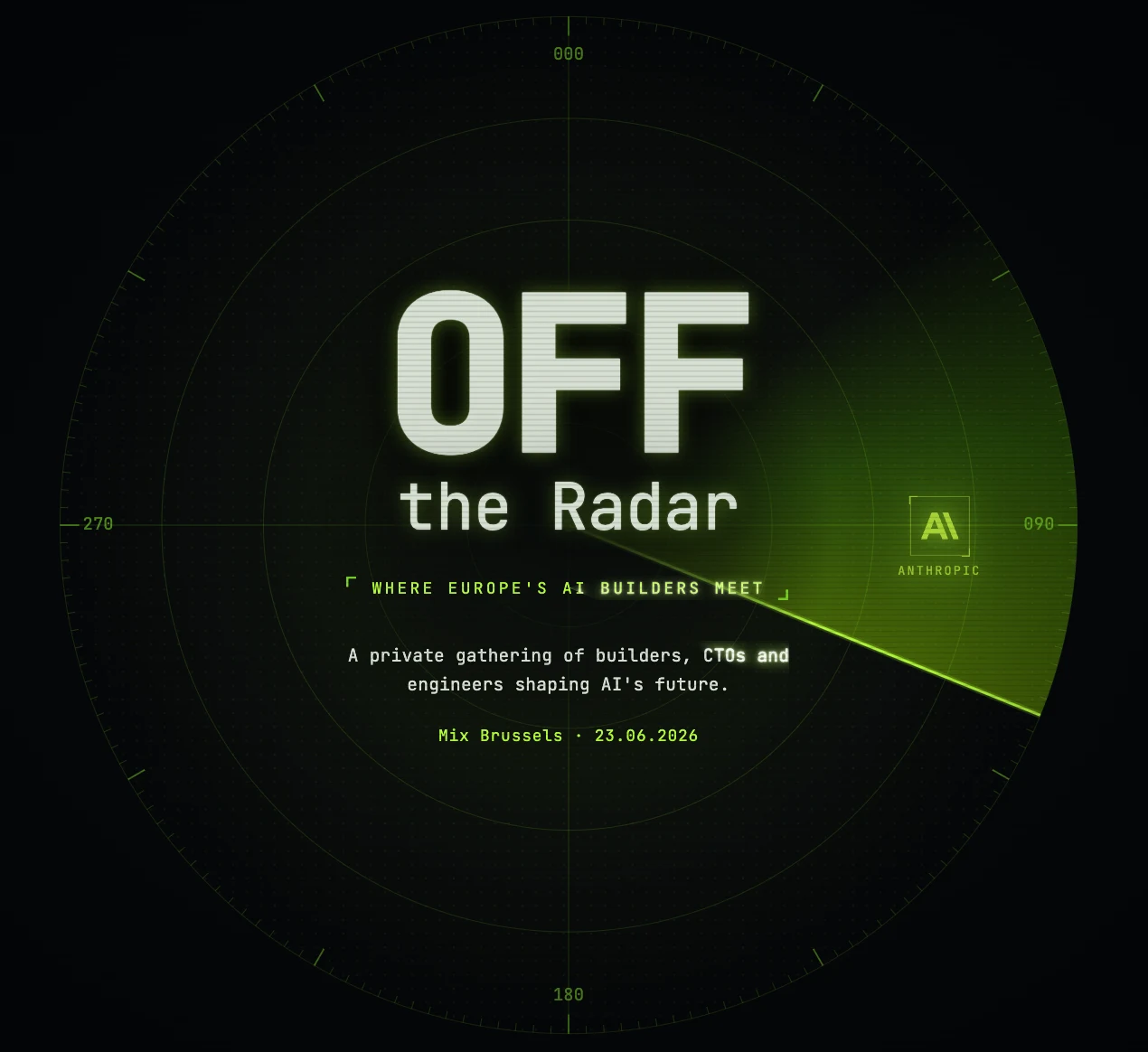
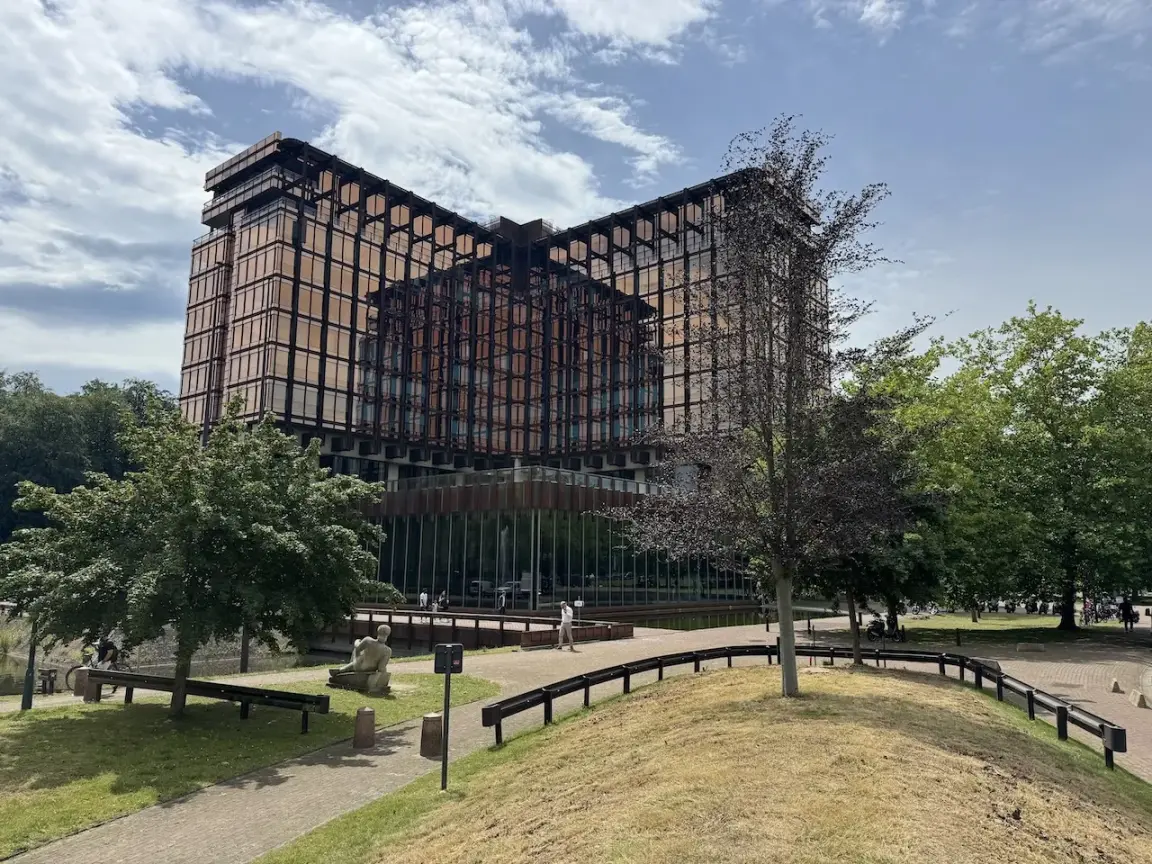
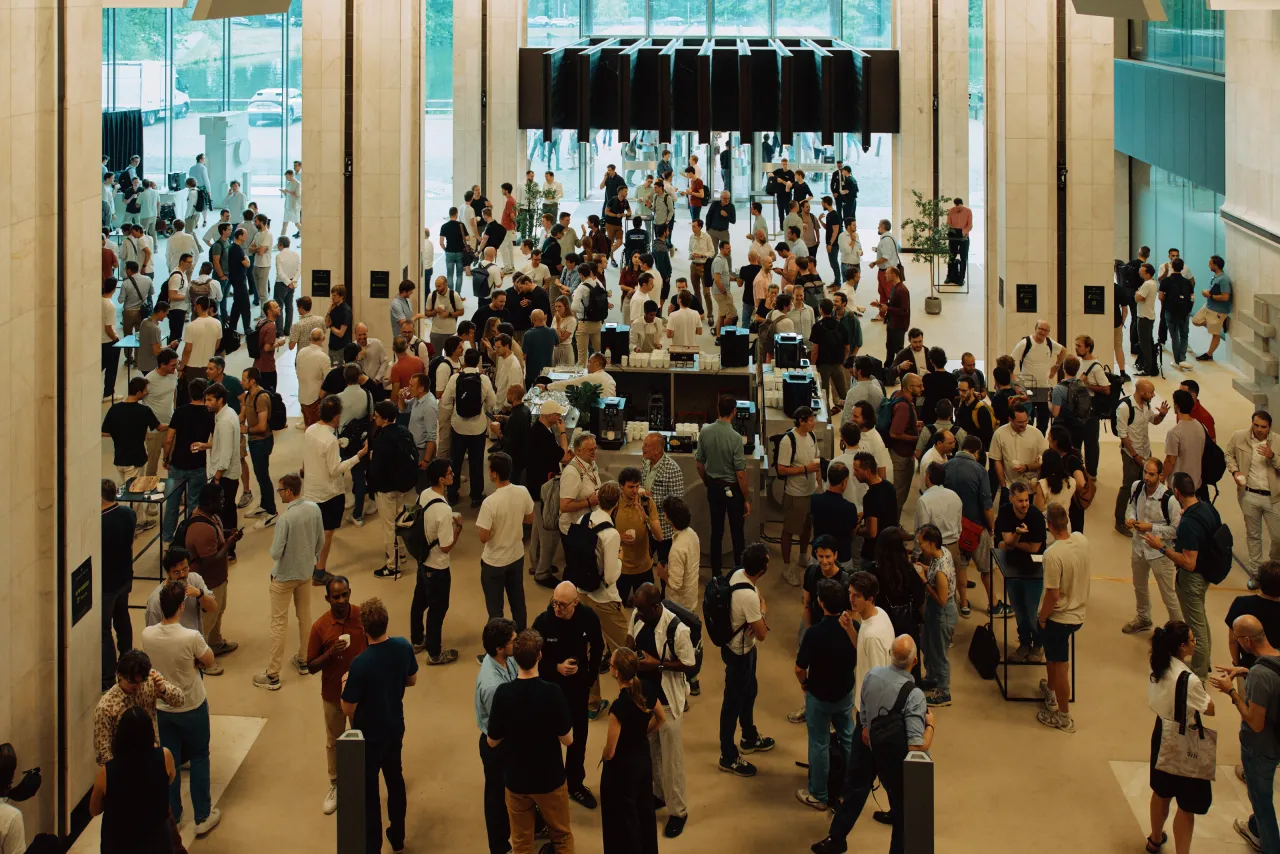
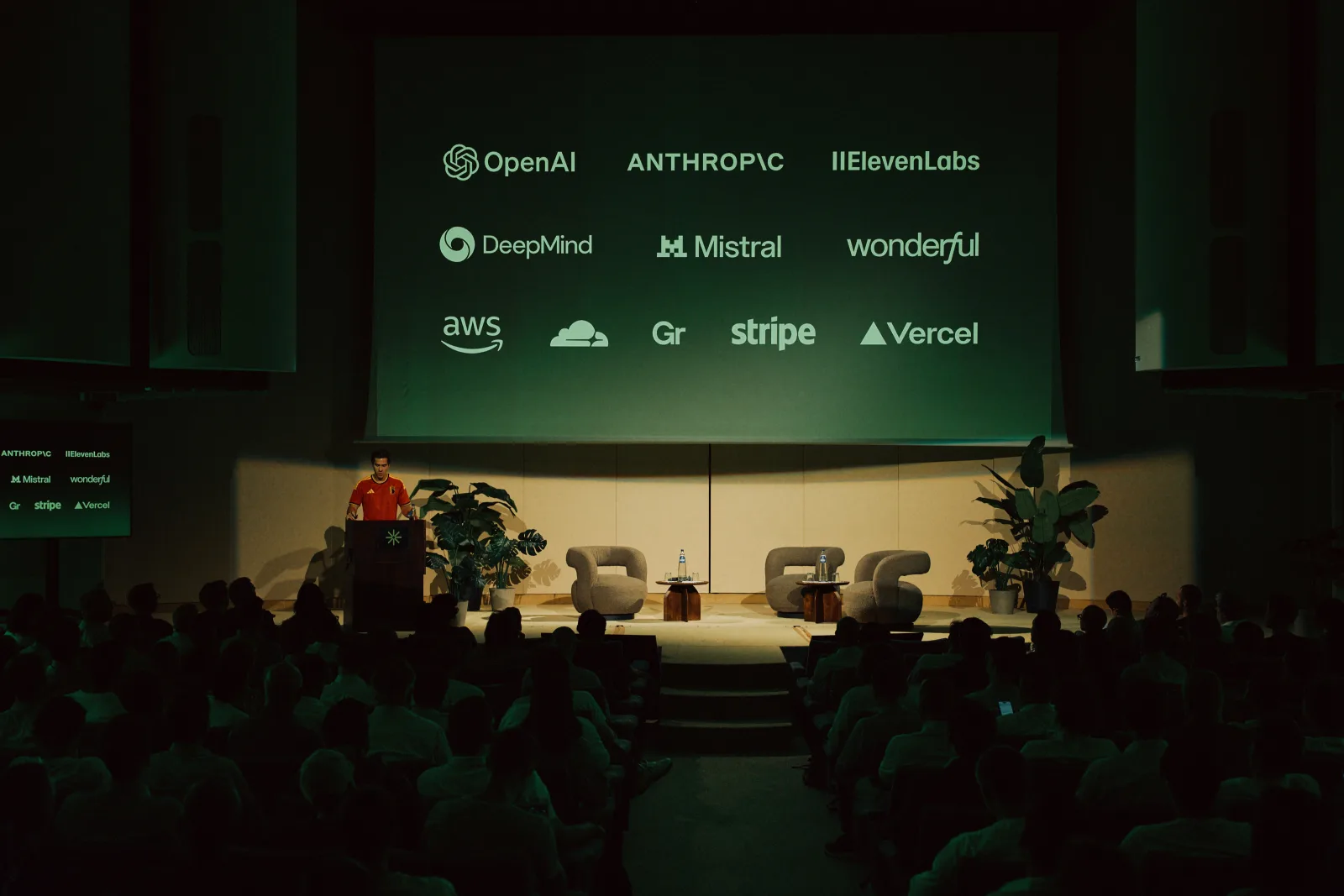
On 23 June 2026, OpenAI, Anthropic, Google DeepMind, Mistral, ElevenLabs, Cloudflare, AWS, Stripe and Vercel shared one stage in Brussels. A line-up you rarely see gathered in one place.
But as a business owner or manager, one question matters most: what did those labs say about where AI is heading? We pulled out the through-lines. Not the technical details, but the shifts that will shape how your business works over the coming years.
1. From giving instructions to giving goals
The biggest shift was felt everywhere. Until recently, you had to tell AI step by step what to do. You typed a question, you got an answer, you typed the next question. Now you give a goal, and the AI works out how to get there on its own.
OpenAI showed this live. They gave their system one instruction, "make this slow website faster", without saying how. The agent worked on its own for 47 minutes: it figured out where the site was slow, tested it in the browser, changed what was needed and then checked for itself that everything still worked. In another example it ran for 10 hours straight on a complex task. The line that stuck: "You no longer write instructions, you design processes that drive themselves."
Anthropic told the same story from another angle: AI that keeps running in the background. Not a chat window you sit and type in, but a digital colleague that's triggered by an event (an incoming question, a time, a notification), completes the task and builds up a memory so it's better the next time.
What this means for your business: AI shifts from "a smart search engine you ask questions" to "a colleague you hand a task that gets it done on its own". The kind of work you can hand off to AI becomes much bigger than writing a short text or drafting an email.
2. AI moves from experiment to production
For two years AI projects were mostly experiments: here and there a test project to see what was possible. The message at Off the Radar was clear: that era is over. The question is no longer "what could we all build?", but "which problem is really worth solving?"
ElevenLabs, which builds voice AI, was sharpest about this. In their view companies get stuck for the same reason every time: they stay in exploration mode. Lots of scattered experiments, no owner, no clear yardstick. Their recipe for actually getting there is sobering in its simplicity:
- Pick one problem worth solving, and stop running ten experiments at once.
- Give it an owner, both technical and commercial, and give them the means to truly make it work.
- Measure what matters. Make sure you can show in black and white afterwards what value it delivered.
That it works was proven by the examples. A telecom player automated customer service and now handles customer queries eight times faster, in more than thirty languages. Another company had AI call restaurants to check opening hours, and updated three quarters of its database in one go.
What this means for your business: the win isn't in "everything AI can do", but in one well-chosen problem, with someone who owns it and a number you hold it to. Start small, but start focused.
3. The difference is in the approach, not the technology
The most reassuring insight of the day: technology is no longer the bottleneck. The models are good enough. What decides whether a company succeeds is how well it brings its people along.
TechWolf, a Ghent company, shared an approach that sticks: "raise the ceiling first, then the floor." Instead of forcing everyone at once, they took eight people from different departments into a two-day bootcamp. Six of them became real frontrunners who pulled the rest along. Strikingly, it wasn't only the techies. People from marketing, HR and finance got just as much out of it.
The same came up in the closing panel with the founders of Aikido and Collibra. Their sober message to anyone starting now: building a company around AI isn't a three-month sprint but a journey of years, and the real work is in selling things and understanding customers, not in following every new AI announcement. More than that: trying to keep up with all the AI news every day mainly leads to burnout. Better to experiment intensively for a few months, apply it, and then take some breathing room again.
What this means for your business: you don't have to follow everything, and you don't have to be a tech company. Start with a few enthusiastic people, let them show what works, and expand from there. Working AI-first is a matter of culture, not IT.
4. AI costs money, and handling that smartly becomes a craft
An honest theme that rarely shows up in the marketing: using AI costs money per use, and it adds up faster than you'd think. Several speakers talked about companies that had used up their annual AI budget by February.
The answer isn't "switch AI off", but choosing more deliberately. Cloudflare put it nicely: you don't need the most expensive, most powerful model for every task. For a simple job a simpler, far cheaper alternative is often enough. Switching smartly between those levels can cut the cost many times over, with no noticeable loss of quality. TechWolf even built internal tools to see which tasks cost a lot and which cost little, and now shares that knowledge openly.
What this means for your business: treat AI usage like any other cost. Know what a task costs you, and pick the cheapest model that still does the job well. We deliberately build solutions that way: the right model for the right task, not automatically the most expensive one.
5. Voice and translation are getting seamlessly good
Anyone who still associates voice AI with the wooden little voice of an old-fashioned phone menu isn't keeping up. The demos on stage were almost indistinguishable from a human, with emotion and intonation.
- Voice agents that finish the job. ElevenLabs showed a phone assistant that doesn't just answer questions, but also takes an order, handles payment and emails a confirmation, with a voice that empathises with the customer. Deployable by phone, WhatsApp, chat or email.
- AI without internet. Paris-based Gradium ran voice AI directly on an ordinary laptop and even on a mini-computer costing a few tens of euros, with no connection to the cloud. A response in a fraction of a second.
- Live translation. A demo translated a conversation in real time from French to English, with a natural voice and no noticeable delay.
What this means for your business: phone-based customer contact, multilingual support and spoken interactions that used to be too expensive or too clunky are now within reach. In a multilingual country like Belgium, that's no small thing.
6. AI is leaving the cloud, and your old systems are no longer an excuse
A through-line among the more technical speakers: AI is no longer locked inside an American data centre.
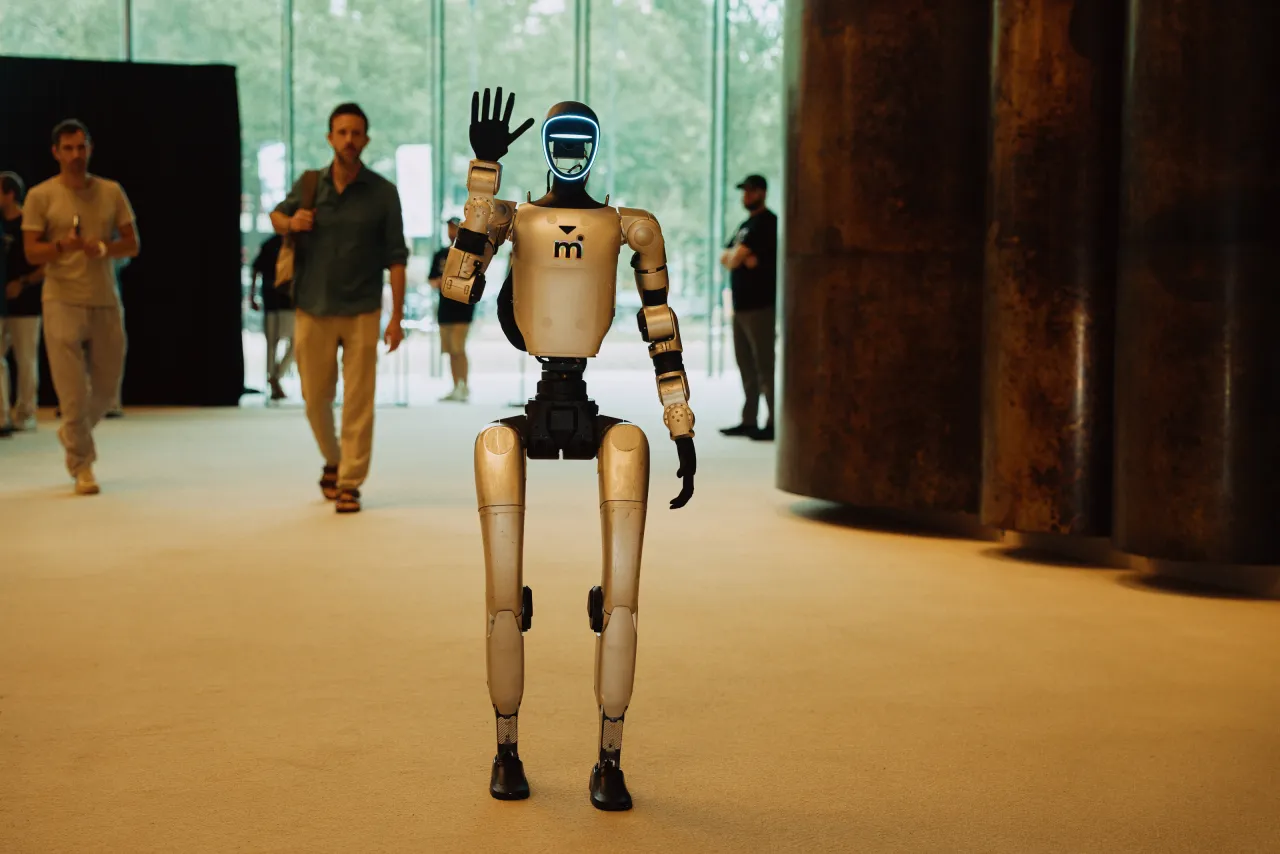
On one hand, AI is moving down to the device itself, your laptop, a sensor, a robot. A Belgian-French company, Vertical Compute, even builds the chips that make this possible, and gave the example of a translation device of around fifty euros that works fully offline. Robots are a longer-term story, where it was honestly said that genuinely profitable use cases are still a few years away, but the direction is clear.
On the other hand, AI can now also handle your existing, older software. Wonderful showed how their AI operates an outdated system without any modern connection just like a human would: looking at the screen, clicking, typing. A task that took more than an hour in such an old system was done in a few seconds. And for companies that don't want to go to the cloud for legal or privacy reasons, Aikido built a physical AI box that runs entirely in-house.
What this means for your business: "our system is too old" or "our data can't leave the building" are no longer blockers. AI can operate your existing software and can, where needed, run entirely within Europe or even within your own walls.
The big picture
Put it all side by side and the picture is clear. AI is shifting from something you talk to into something that does work for you. The models are ready. The real challenge is no longer technical, but human and organisational: choosing the right problem, making someone responsible for it, keeping the cost in hand and bringing your team along.
That's exactly the work we do every day. Not chasing the latest demo, but for a concrete company choosing the right problem, connecting AI to your existing systems and data, and building it so it runs reliably in your day-to-day operations. Close by, in your own language, and with your data safely in Europe.
Curious which of these shifts would mean the most for your business? Book an introduction or see which use case is closest to your situation. We listen first, then we build together.